
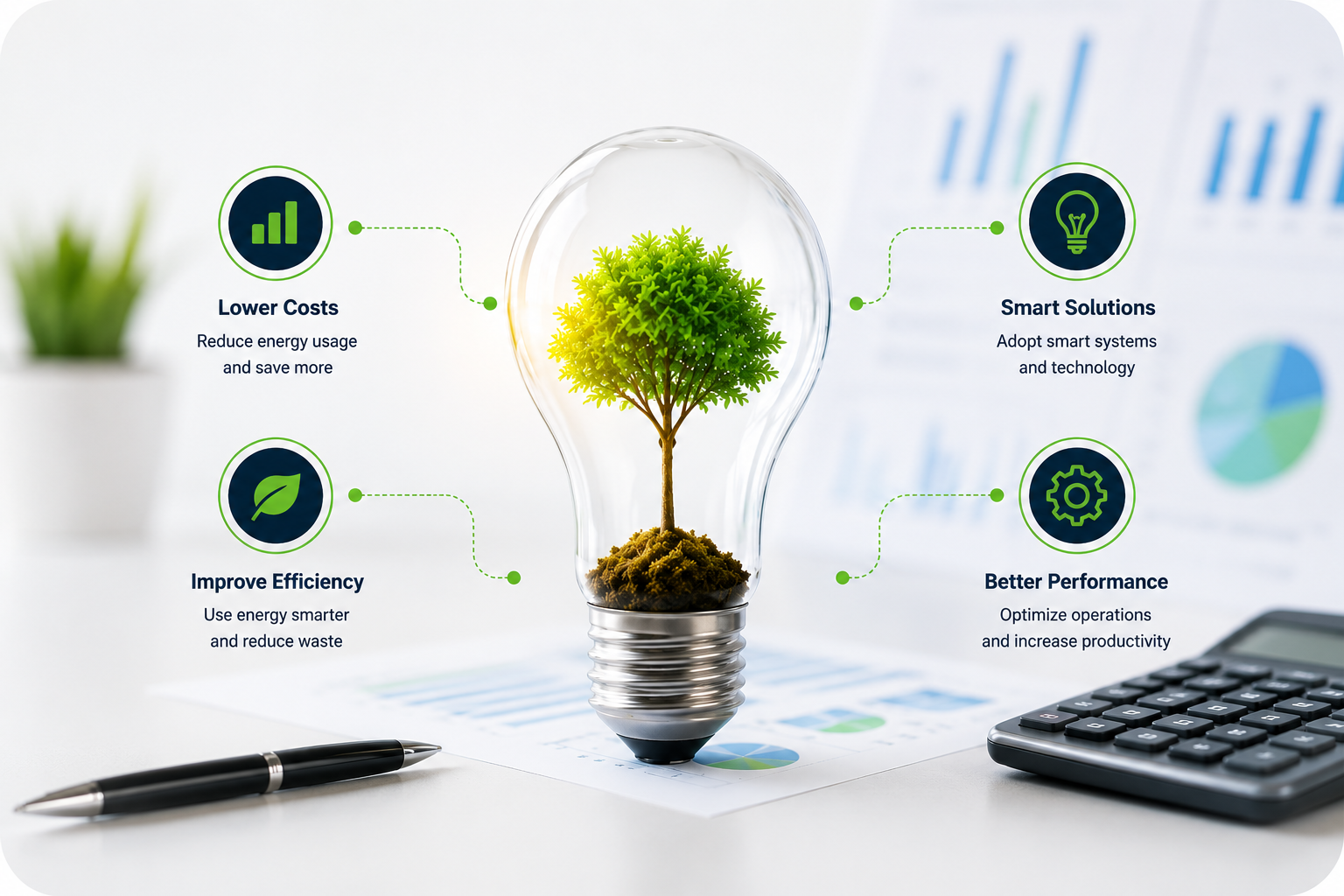
Energy costs can take a big bite out of your business profits. Whether you run an office, shop, restaurant, warehouse, clinic, or manufacturing space, reducing energy waste can help you save money every month.
The good news is that you do not always need major upgrades to see results. Simple changes like reviewing your energy usage, switching off unused equipment, improving lighting, and comparing business energy deals can make a real difference.
In this guide, we’ll explain how to reduce business energy cost with practical, easy-to-follow steps.
Why Reducing Business Energy Usage Matters
Business energy prices can change quickly, and many companies end up paying more than they need to. Some businesses use too much energy because of old equipment, poor heating controls, lights left on, or unsuitable energy contracts.
Reducing energy consumption can help your business:
- Lower monthly utility bills
- Improve profit margins
- Reduce unnecessary waste
- Create a more efficient workplace
- Support sustainability goals
- Avoid paying high out-of-contract rates
Even small improvements can lead to long-term savings when they are done consistently.
1. Start With a Business Energy Audit
Before making changes, check where your energy is being used. A simple energy audit can help you find waste and understand what needs fixing first.
Review your:
- Recent business energy bills
- Meter readings
- Heating and cooling usage
- Lighting habits
- Equipment running after hours
- Old or inefficient appliances
- Current gas and electricity contracts
Walk through your premises and ask: “Is this using energy when it does not need to?” This simple question can uncover a lot of hidden waste.
2. Switch Off Unused Equipment
One of the easiest ways to reduce business energy cost is to turn off equipment that is not being used.
Computers, printers, screens, kitchen appliances, lights, and machinery can all waste energy when left on overnight or on standby.
Create a daily shutdown checklist for staff. This can include switching off:
- Lights
- Monitors
- Printers
- Chargers
- Kitchen appliances
- Display screens
- Non-essential equipment
A clear end-of-day routine can reduce waste without costing anything.
3. Upgrade to LED Lighting
Lighting is one of the easiest areas to improve. If your business still uses older bulbs or fluorescent lighting, switching to LED lights can help reduce electricity usage.
LED lighting lasts longer, uses less energy, and often provides better brightness.
You can also save more by adding:
- Motion sensors
- Timers
- Daylight sensors
- Separate lighting zones
- External lighting controls
This is especially useful in stockrooms, toilets, corridors, meeting rooms, and areas that are not always occupied.
4. Control Heating and Cooling
Heating and cooling systems can use a large amount of energy, especially if they are running when the building is empty.
Check your heating schedule and make sure it matches your opening hours. Avoid heating rooms that are not being used, and do not leave heating or air conditioning running overnight unless it is necessary.
To reduce waste:
- Set sensible temperature levels
- Keep doors and windows closed
- Use timers correctly
- Service boilers and air conditioning units
Small changes to heating controls can create noticeable savings.
5. Improve Insulation and Stop Draughts
If heat is escaping from your building, your heating system has to work harder. This increases your business energy usage and raises costs.
Check for draughts around:
- Doors
- Windows
- Roof spaces
- Pipework
- Loading bays
- Poorly sealed frames
Simple fixes like door seals, draught proofing, pipe insulation, and keeping external doors closed can help your workplace stay warmer for less.
H2: 6. Maintain Equipment Regularly
Old or poorly maintained equipment often uses more energy than it should. Regular servicing helps equipment run efficiently and can prevent expensive breakdowns.
Make sure you maintain:
- Boilers
- Air conditioning units
- Fridges and freezers
- Ventilation systems
- Kitchen appliances
- Pumps and motors
- Manufacturing equipment
If equipment is old, unreliable, or expensive to run, it may be worth replacing it with a more energy-efficient model.
7. Use Smart Meters and Energy Monitoring
Smart meters and energy monitoring tools help you understand when your business uses the most energy.
This can help you spot unusual usage, such as equipment running overnight or sudden increases in consumpt
Energy monitoring can show:
- Peak usage times
- Energy waste after closing
- Faulty equipment
- Seasonal changes
- Areas using too much power
Once you know where the problem is, it becomes easier to fix.
8. Encourage Staff to Save Energy
Your team can play a big role in reducing business energy consumption. Simple habits repeated every day can help lower costs.
Encourage staff to:
- Turn off lights in empty rooms
- Shut down computers properly
- Avoid leaving chargers plugged in
- Report draughts or faults
- Keep doors closed in winter
- Use equipment only when needed
Make energy saving part of your workplace culture. Clear reminders and simple signs can help staff remember.
9. Review Your Business Energy Contract
Reducing usage is important, but you also need to make sure you are not overpaying for the energy you use.
Many businesses stay on the wrong tariff because they forget to compare suppliers or miss their renewal date. This can lead to higher rates and unnecessary costs.
Check your:
- Contract end date
- Unit rates
- Standing charges
- Renewal window
- Exit fees
- Estimated annual usage
- Out-of-contract rates
If your current deal no longer suits your business, comparing business energy options could help you find a better rate.
10. Compare Business Energy Deals With Utility Market Watch
Utility Market Watch helps UK businesses compare business gas, electricity, and water options. Instead of spending hours checking different suppliers yourself, you can get expert support and access live business energy pricing from trusted suppliers.
We help businesses:
- Compare business electricity deals
- Compare business gas tariffs
- Review business water options
- Understand current utility costs
- Find fixed tariff options
- Save time on supplier comparisons
- Get support from a dedicated account manager
If you want to reduce business energy cost, comparing your current deal is one of the smartest steps you can take.
Final Thoughts
Reducing business energy consumption does not have to be complicated. Start with simple actions like switching off unused equipment, upgrading lighting, controlling heating, maintaining equipment, and checking your current energy contract.
The more efficiently your business uses energy, the more control you have over your monthly costs.
Ready to lower your business energy costs?
Contact Utility Market Watch today or request a quote online to compare business energy deals and find a better option for your company.